
History of Snowboarding
The Birth of the Snowboard & Boarding Vacations
 This is where snowboarding got it’s start. So why not board where snowboarding first started, beside the conditions are just great for snowboarding at nearly all of Vermont’s Ski Areas. A snowboarding vacation is outrageous way to getaway. Vermont offers the snowboard enthusiast challenging fun at a variety of slopes. With the best mountains, hotels, inns, resorts, and mountain rentals – it’s no wonder Vermont is New England’s top boarding destination. Discover the best snowboarding in the east in … Vermont – where snowboarding began! Ask us about VT Snowboarding history or share comments. To feature your business, contact us.
Vermont Snowboarding History – Winter Vacations
The Wildflower Inn, 2059 Darling Hill Road, Lyndonville, VT 05851 | 802-626-8310
Trailside Lodging in the Northeast Kingdom of Vermont. Your next great adventure awaits at The Wildflower. A four-season destination property for the best in outdoor recreation and Vermont experiences. With our 25-room Inn, full-service restaurant, pub, Village Sport bike shop (with rentals) and KCE guide company right on the property, you will have everything you need to make the most of your Vermont visit.
Visit The Wildflower Inn - Lyndonville, VT
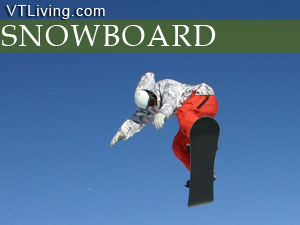 Take a passion for surfing, skateboarding and skiing, mix it with the force of gravity, bring it to the mountains and Voila! You have the birth of snowboarding. In the 1960’s and 70’s, early boarders called themselves ‘Snurfers” (Snow + Surfer) and would hurl themselves down mountains with no foot straps and no control, on boards that were little more than two skis strapped together. Much like the antiquated surfboards of the 1960’s, the first snurf boards were unreasonably long and cumbersome. Snurf Boards – were the original Snowboards – a unique made in Vermont Product.
In the early 1970’s, not only did the size of surfboards decrease to a more modern and manageable size, the snurf boards did as well. It was at this point that Jake Burton Carpenter began developing safe and manageable snowboards in earnest. Working out of his garage in Manchester, VT, Burton had a vision of bringing snowboarding to the world. In the mid-70’s he began shaping snowboards out of wood and attaching rubber foot straps to them as primitive bindings. This vision apparently succeeded, because Burton Snowboards has been one of the leading forerunners in the snowboard industry for the last 30 years. The vision of Jake Burton in the 1970’s has directly influenced today’s modern sport of snowboarding.
In the late 1970’s and early 1980’s, Vermont was home to one of the first established snowboard competition in the world – the National Races at Suicide Six in Pomfrey, VT. Early snowboard races were also held at Pando Park in Rochford, Michigan. A concentrated interest in this sport eventually spawned the US Open, the world’s first renowned snowboard competition. The US Open has been held at Magic Mountain, and eventually moved to Stratton Mountain Resort.
Vermont was also the first state in America to offer terrain parks at its ski resorts. In the early 1980’s, the tiny Sonnenburg Ski Hill near Barnard, VT was one of the first to open its arms to snowboarders. Not only did Sonnenburg give those early snow boarders free reign to build their own jumps on one trail, they also provided an endless supply of hay bales and picnic tables for jumping as well. Because the vast majority of ski resorts would not allow snowboarding on their trails at the time, what Sonnenburg did was truly groundbreaking. Because of Sonnenburg’s willingness to open their doors to boarders, snowboard terrain parks are now a commonplace sight at most American ski resorts and countless other international winter resorts as well.
Thanks to the innovative visions of a handful of Vermonters, snowboarding is now an internationally accepted sport worldwide.
In 1988, the US Amateur Snowboarder Association was formed. By 1990, it had grown to become the International Snowboarding Federation. Finally, in 1998, snowboarding made it big. People started realizing it wasn’t a fad that would fade as quickly as it seemed to have appeared. No longer considered just an ‘extreme’ sport, snowboarding had at last become a recognized Olympic sport
. Vermont was well represented at the Olympics in Nagano, Japan that year, with several native Vermonters competing in two different competitions; the Halfpipe and the Giant Slalom.
Today, Vermont resorts continually improve their boarding services, with newer and more innovative terrain opening each season. Vermont – home of the original Burton Snowboards. Thanks to Vermont snowboarders, 98% of all ski resorts not only allow snowboarding on their trails, they develop challenging slopes geared specifically for the boarders as well.

History of Snowboarding | Learning to Snowboard | Burton Snowboards
Snowboard Terminology | Vermont Snowboard Resorts | History of Burton
SNOWBOARD SALE
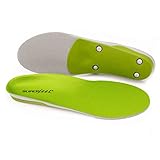
- Trim to Fit: Superfeet insoles are made to be trimmed to fit your shoes and boots; follow cutting instructions before use, and if you're between sizes, size up and trim down to fit
- High Arch Support Insoles for Women & Men: Deep heel cup works with your body's natural cushioning for maximum support
- Premium Arch Support Insoles: Sculpted heel cup cradles the heel to maximize natural shock absorption; designed for roomy footwear
- Superfeet Insoles for Odor Control: Moisturewick top cover helps reduce odors and keeps feet fresh; high density closed-cell foam supports the whole foot
- Formerly Known as Superfeet GREEN: All-Purpose Support High Arch (Green) insoles are the same great arch support insoles you love, now with a new name
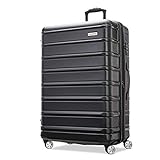
- 28" SPINNER LUGGAGE maximizes your packing power and is the ideal checked bag for longer trips.Number of wheels:4
- PACKING Dimensions: 27.75” x 19.6”x 12.4", OVERALL DIMENSIONS: 30.4” x 20.9”x 12.4”, Weight: 10.8 lbs.
- 10 YEAR LIMITED WARRANTY: Samsonite products are rigorously tested to ensure our products meet stringent standards. This bag comes with a 10-year warranty against defects in materials and workmanship.
- SCRATCH-RESISTANT POLYCARB brushed-texture shell reflects light and protects from scratches, keeping cases beautiful trip after trip
- FOUR, MULTI-DIRECTIONAL OVERSIZED DUAL SPINNER WHEELS for effortless mobility, re-engineered lightweight
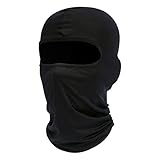
- 【Multiple Wearing Methods】Can be worn as opened or closed balaclavas, face masks, neck gaiters, scarfs, bandanas, helmet liners, headbands and even wristbands
- 【Multifunctional】Sun UV protection, summer cooling, windbreak, dust proof and sand control, sweat absorption and quick drying, wrinkle free and machine washable
- 【Very Practical】 Suitable for multiple activities, such as skiing, snowboarding, fishing, motorcycling, running, climbing, hiking, tactical training and other outdoor activities
- 【Unique Design】 Designed in a minimalist unisex aesthetic which is suitable for men/women and even children. More colors available

- 👟【Creative Telescopic Bendable Design】Say goodbye to damp, uncomfortable footwear with the FORLIM shoe dryer! Experience the difference with our Innovative telescopic and bendable dry ports that can reach deep inside the toe box of high boots. While the 180° foldable dry rack can accommodate footwear and gloves of all sizes and shapes. Keep your shoes and boots dry and comfortable with this innovative and easy-to-use dryer!
- 👟【Fast and Efficient Forced Air Heating】Our boot dryer operates silently, gently warming air that rises and dries your footwear in just 1-2 hours. The forced air heats up to 105°F-140°F/40.5℃-60℃, ensuring that your items are dry and ready to go. (Indoor use recommended for optimal performance)
- 👟【Intelligent Timer】Save energy and customize your drying cycle with the 2-hour automatic shutoff timer. Set different working times for different types of shoes and reduce power consumption easily. (Note: The "42 °C" in the timer is for decorative purposes only and does not represent temperature.)
- 👟【Wide Application】Our shoe dryer is suitable for drying shoes, boots, gloves, ski boots, sneakers, athletic and hunting footwear, as well as outdoor gear. Keep all your items dry and comfortable with our versatile and efficient dryer.
- 👟【Satisfaction Guaranteed】We stand behind our product with a 2-year warranty and offer 24/7 friendly customer service. Please do not immerse the product in water or any other liquid to avoid damaging it. Trust our high-quality shoe dryer to keep your footwear in top condition!

- FAST DRYING: The boot dryer for work boots designed to quickly dry footwear in 80 minutes, much quicker than other boot dryers with heat blower heavy duty that takes up to 24 hours
- HEAT BLOWER TECHNOLOGY: This heavy-duty shoe dryers for sneakers uses hybrid forced air system to circulate warmed air, emphasizing the shoe dryer and deodorizer function while ensuring undamaged footwear
- ELIMINATES ODOR: The boot dryer and deodorizer effectively eliminates moisture and unpleasant odors from both work boots and sneakers, serving as a versatile boot and shoe smell eliminator
- MULTIFUNCTIONAL: Our 4-tube portable boot dryer caters to a variety of gear. It's perfect as a boot and glove dryer, glove dryer and specifically as a ski boot dryer. Its extendability makes it a travel boot dryer too
- PREMIUM FEATURES: Comprehensive boot warmer features include built-in heat switch for the ski boot dryer, 180-minute auto timer for boot dryers with heat blower and sloped base with 4-drip pads ensuring no mess
- VERSATILE ATTACHMENTS: Customize the boot glove dryer to fit your needs with the included shoe and helmet attachments. Adjustable and easy to attach, use it to dry your boots, cleats, gloves, and hats
- CONVENIENT DRIP TRAYS: The boots dryer is equipped with handy drip trays that catch excess moisture to keep your space spotless and mess free during the drying process
- CARRYING HANDLE FOR PORTABILITY: The portable handle and cord management tool makes our electric shoe dryer a great travel companion for those ski trips, fishing outings, mud runs, and ice rink sessions
- 2 Year Replacement Policy: At Everlasting Comfort we take your experience with our products to heart. To show we're here to help, we pledge to replace your shoe dryer for 2 years, should anything go wrong

- 【Waterproof Seal Design】Airtag holder adopts IPX8 waterproof seal design, which can ensure your Airtag stays dry even if the case is submerged in water.
- 【3M Strong Adhesive】The bottom of the Airtag case uses high-quality 3M adhesive, which can easily adhere Apple Airtag to various surfaces, with good anti-slip effect, strong adhesion and long-lasting durability. It can effectively avoid the sliding and falling of the Airtag,provide better protection.
- 【High-Quality Material】Air tag Holder is made of high-quality ABS+PC material, the case is matte black, stylish design, durable, shockproof, scratch-resistant, drop-proof, and lightweight. A silicone pad design is added at the bottom, which can effectively reduce the impact of collisions on the Airtag and protect the Airtag from damage.
- 【Compatibility】Compatible for airtags 2021, 3M adhesive can easily stick Air tags on important items. For example: luggage, handbags, laptops, snowboards, drones, power tools, bike frames, camping gear, and more.
- 【Package Includes】air tags holder-4 pack (Not include Airtag). If you have any questions, Take a picture and send it to us, we will reply within 12 hours.
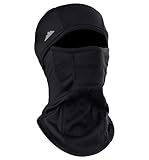
- WINTER READY: Winter has nothing on our Strike balaclava. Ready to brave all the elements from snow and sleet to wind, dust, cold, and UV, our ski mask for women and men isn’t letting in any unwanted intruders. So whether you blaze down the slopes like Shaun White, shovel snow or ATV in the desert like Mad Max, our winter balaclava has got you covered.
- LIGHTWEIGHT COMFORT: You’ll be surprised by how warm this lightweight, breathable, and extra-stretchy balaclava head mask is. Designed from an 89% Polyester and 11% Spandex, our winter face mask for men and women wicks away moisture while retaining heat. You’ll stay comfortable and dry in our full face mask all day!
- CONVERTIBLE FACE MASK: Wear the Strike balaclava as a full face mask for ultimate protection from the elements. Wear it as a helmet liner, ninja hood, half ski mask, snowboard mask, neck warmer, or pull it up to wear it as a face mask while you take public transportation and go grocery shopping.
- NO FOGGING WAY: To prevent stuffiness, the Strike balaclava face mask features ski ready mesh breathing panels that increase airflow while minimizing condensation on your goggles or glasses. So if you’re looking for a snow mask or ski face mask that is going to keep you warm and provide great goggle visibility then look no further!
- SUPERSTRETCH OSFM COMFORT: Fit and comfort is key, especially when you’re in harsh environments. Our One Size Fits Most snowboard mask is made with 4 way stretch fabric to give a snug and comfortable ‘wear all day’ fit. Warning - you might not want to take this head mask off!
- PERFECT FOR MOTORCYCLING: The Strike balaclava is a perfect motorcycle face mask in fall and winter. The low profile design with flatlock stitching provides great under helmet comfort. The shell outer fabric blocks wind chill, rain and sleet whilst the breathable mesh paneling prevents helmet fog. And when you stop for a coffee, the hinge design means you can easily pull the mask down whilst retaining the warmth!
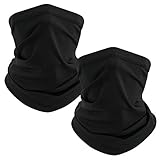
- ✔️Universal Fit: 16'' X 9.5'' (±0.2in) but stretchable to be universal fit and can be used for different purpose
- ✔️Thin & Cool for Summer Use: thin and lightweight material to make you feel cool and breathable during hot days
- ✔️Moisture Wicking: no sticky feelings if sweaty, as our neck gaiter absorbs sweat to help get dry faster than non-sweat-absorb materials
- ✔️Sun & Wind-Proof: help protect your skin from UV light under direct sunlight and you can breath as usual in windy weather and no need worry of breathing in dust
- ✔️Machine Washable: wash before your first use and remember to wash every time after use to keep hygienic

- 🎁 Best Gifts Idea For Your Friends And Family! 🎁 — Professional Knee Brace with Patella Gel Pad & Removable Side Stabilizers, Medical Knee Support with Open Patella and Back Design. Adjustable Velcro Straps for Best Fit, BEST CHOICE for Pain Relief and Sports Protection - Anti Slip, Day & Night Wear. Class 2 Medical Device with FDA Approved — Doctor Recommended! ACE-43
- NEENCA KNEE SUPPORT TECHNOLOGY— An anatomically contoured patella gel pad surrounds your kneecap, removable dual side hinged copper stabilizers fit tightly with your joint. These special functional element strengthen side support and maintains joint stability, providing maximum support for your knee joint, innovatively infuse copper ions into spring stabilizers to help control your movement, effectively assist knee recovery treatment.It's the BEST CHOICE for sports protection and pain recovery.
- EFFECTIVE RELIEF & SUPPORT— The copper hinges on both sides will provide stability and protection to weak and injured knees, significantly reduce the pressure of the kneecap and provide maximum support for the knee joint. Wrap around the patella to enhance the stability of your knee and relax tendons, avoid pulling, prevent muscle strain. Medical knee brace for knee pain, meniscus tear, arthritis, ACL, PCL, MCL, joint pain relief, Sprains, Strains, sports injury recovery and so on.
- DOCTOR RECOMMENDED— It will effective strengthen side support and maintain your joint stability, providing maximum support for knee joint. This knee brace fit your leg perfectly and it protects the knee from potential injuries without sacrificing the mobility! The dual copper hinges are easily removed from the integrated sleeves when less support is needed. More reliable than other knee protectors to provide extra reinforcement without sacrificing comfort ,so you can wear them all day long!!!
- COMFORTABLE EXPERIENCE— Open patella and back design will avoid pressure to patella and sweat accumulate. Soft fabric with ventilation holes and 2 adjustable Velcro straps, airflow vented tech to reduce odor and moisture. Circular breathing, breathable and absorbing sweat. The top and bottom Velcro straps are highly adjustable that ensures a snug fit from back to front, which means It is perfect for people with big thighs or elderly people, Don’t need to worry about the size anymore!!!
- TRUSTED BRAND— Designed specifically for people with kneecap pain or joint injuries, this knee brace is easy to use and can be done completely by yourself. Widely used in weightlifting, basketball, running, gym, tennis, hiking, swimming, skiing and more! Class 1 Medical Device with FDA Registered — Doctor Recommended. Fits both left and right legs, universal for men and women.100% satisfaction guaranteed, full refund for any reason!!!

- COZY DRY EVERY MORNING - Step into warm, dry footwear every morning. Dries wet boots, shoes or gloves safely overnight with fanless thermal air that rises naturally without over-drying or shrinking.
- HELPS REDUCE ODORS – Keeping your boots, shoes, and gloves dry is the key to keeping them stink-free. Dry time Warm-up (30 mins); Damp (8 hours); Wet (12 hours).
- SILENT DRY - Safe, Silent, Simple. Zero noise, convection heater with no fan, motor, or moving parts. Energy efficient heat uses less electricity than most light bulbs (36 Watts).
- GREAT FOR - Heavy duty boot dryer for work boots, kids boots & sport shoes, boxing gloves, leather boots, rubber boots, running shoes, hiking boots, ski & snowboard boot liners, winter gloves & socks.
- TRUSTED BRAND - Includes a 2-Year Warranty. Built tough like you by 'The Brand That Works'.
Vermont Ski Resort Guide
Vermont Products | Visit VT Towns | FWM 24/7 Shopping
Country Weddings | New England Recipes
VT Inns | Red Sox Gifts | Travel Destinations
New England Living | NE Ski Resorts
Fitness and Sports Products On Sale Now
Join Amazon Prime - Watch Thousands of Movies & TV Shows Anytime - Start Free Trial Now
Free World Mall
Country Weddings | Vermont Products | State of Vermont